
Japan
In 2024, I was on a speaking tour of Japan and stayed a full month so I could explore Japanese culture and go a-roaming around the country.
One of the most magical adventures was the week I spent in a shukubo (temple lodging), Komadori Sanso, affiliated with the Mushashi Mitake Shrine, high on the sacred mountain of Mitakasan.
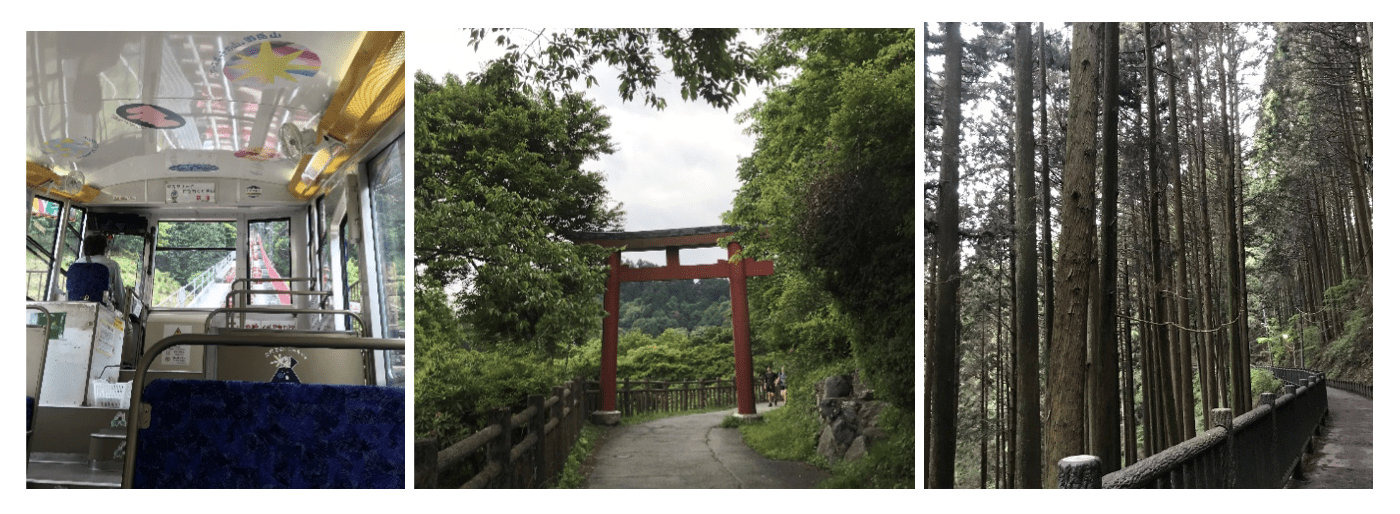
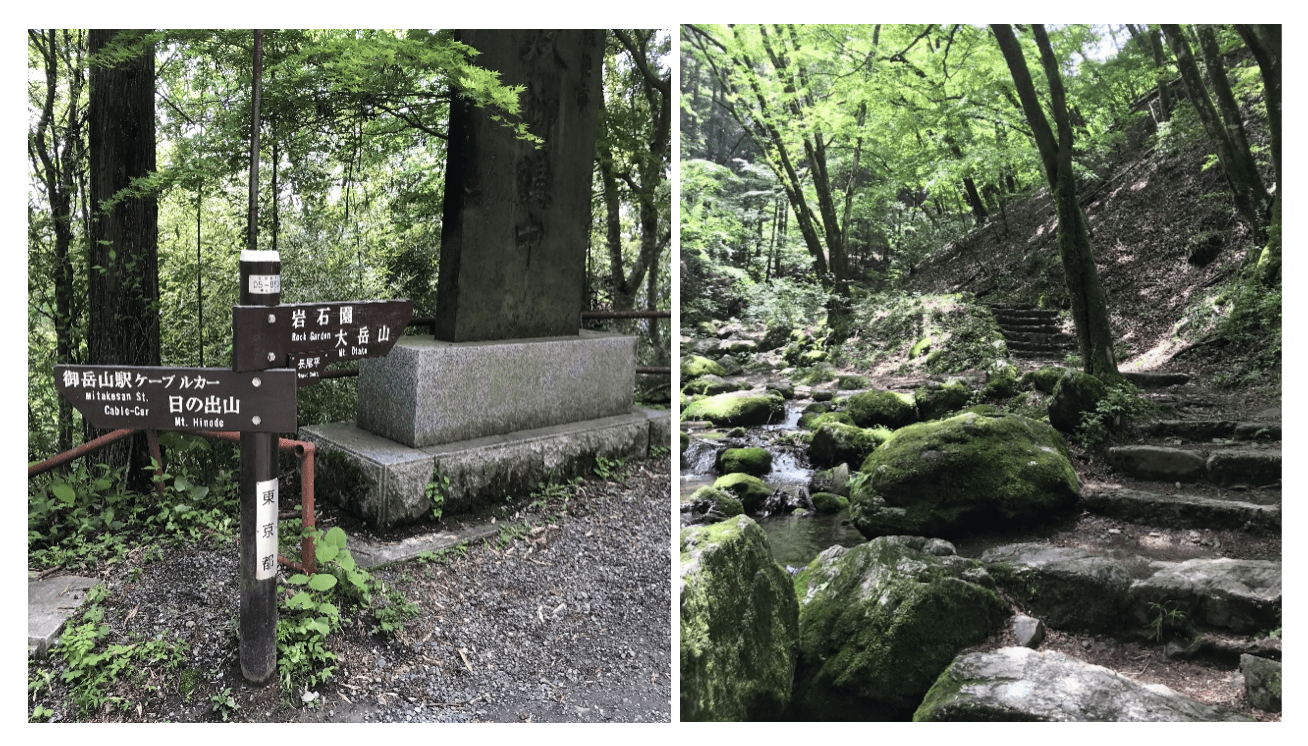
As on a quest, I journeyed out of Tokyo via the Ome Line (hour and a half), a bus and a cable car up the mountain, then a half-hour hike through forest to reach my lodging.
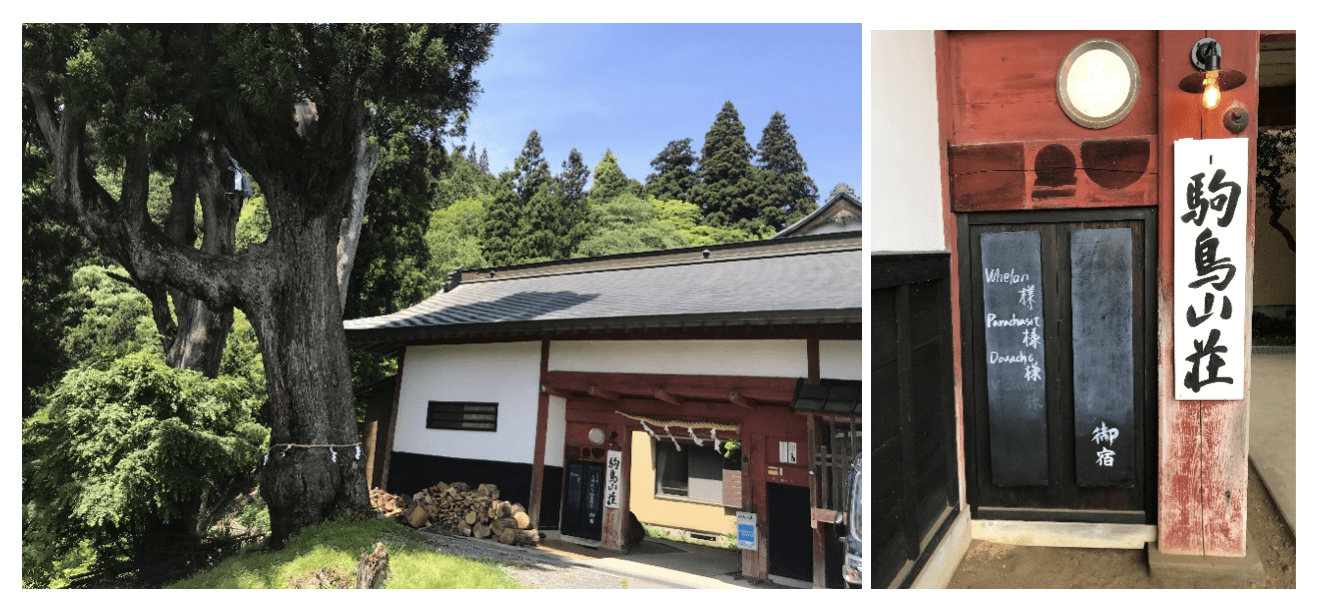
Komadori Sanso, glorious location, delightful family hosts and delicious food.
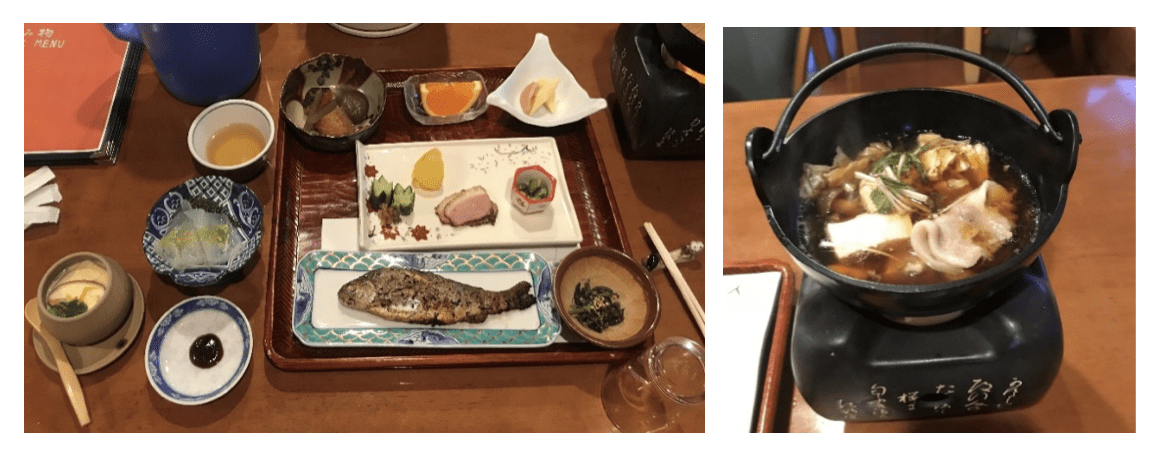
The meals provided were washoku, traditional Japanese cooking. Oishi deshita!
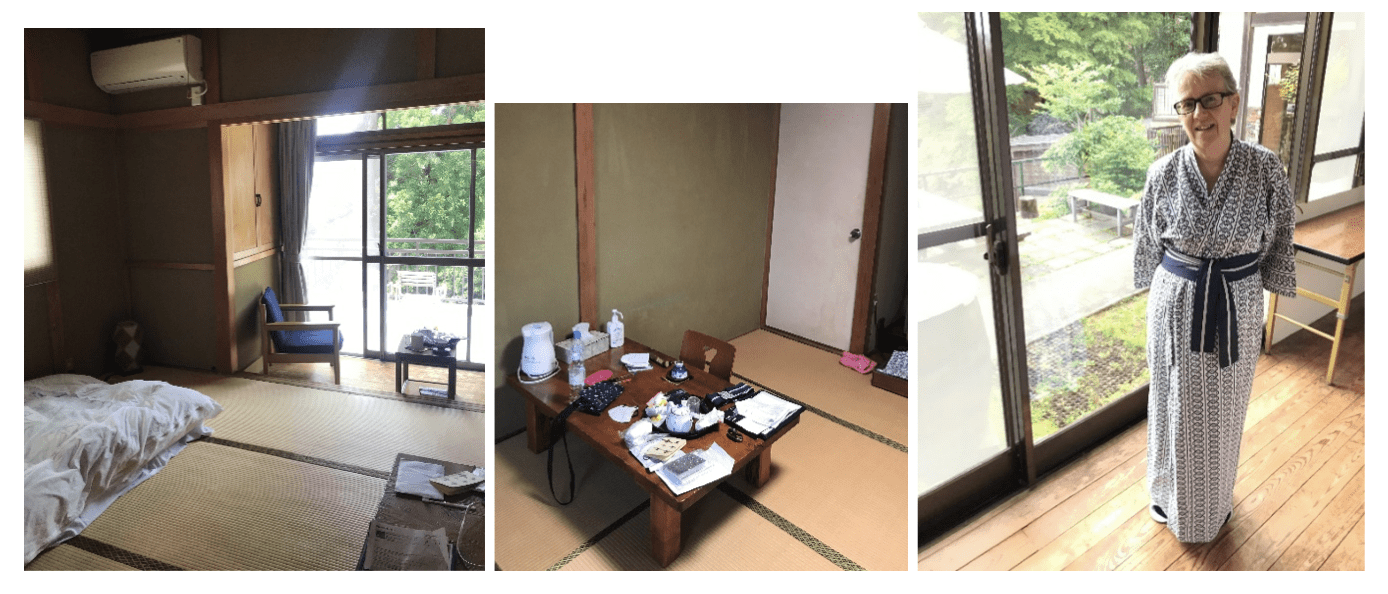
My room with tatami mats had a balcony overlooking the forest, a futon bed and a tea table. It also provided a yukata, house robe, for me to wear. (And excellent wifi!)
I went to the Mitake Shrine daily. When visiting a Shinto shrine, you remain outside. After ablutions at the water station, you throw coins into the donation box, bow, clap hands twice, bow again and whisper prayers or wishes. (I leave the bell ringing to Japanese people.)
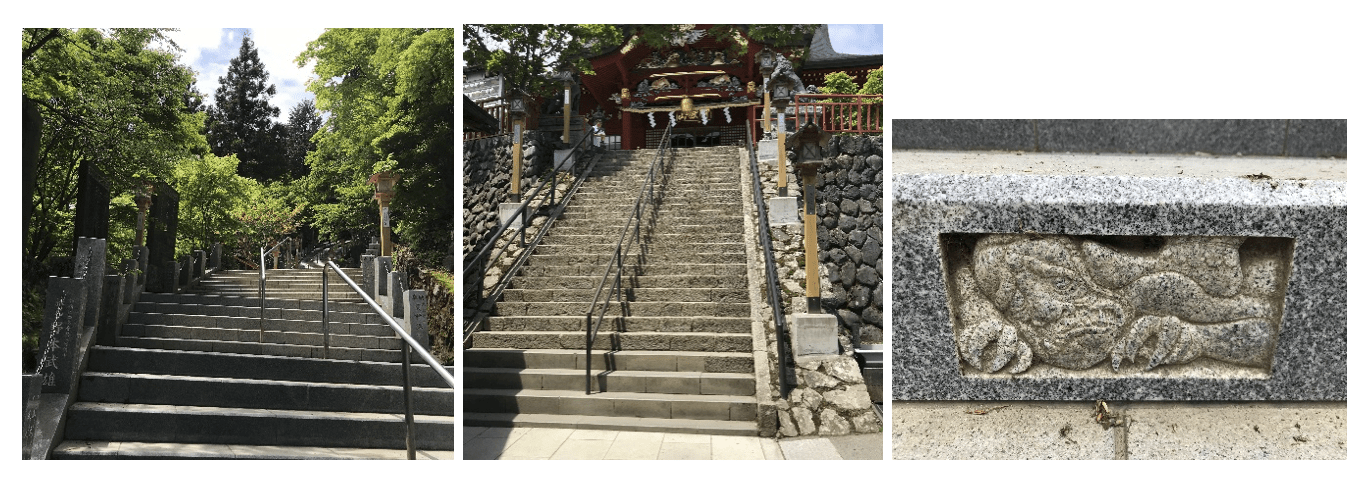
Steps and steps lead up to the shrine, one with a trapped demon. Musashi Mitake is dedicated, like the holy mountain itself, to Okami, the wolf god. This was a surprise for me, for my last name (as opposed to my pseudonym) is Whelan and Faoláin in Irish means “little wolf” as faol is the older Irish word for “wolf”.
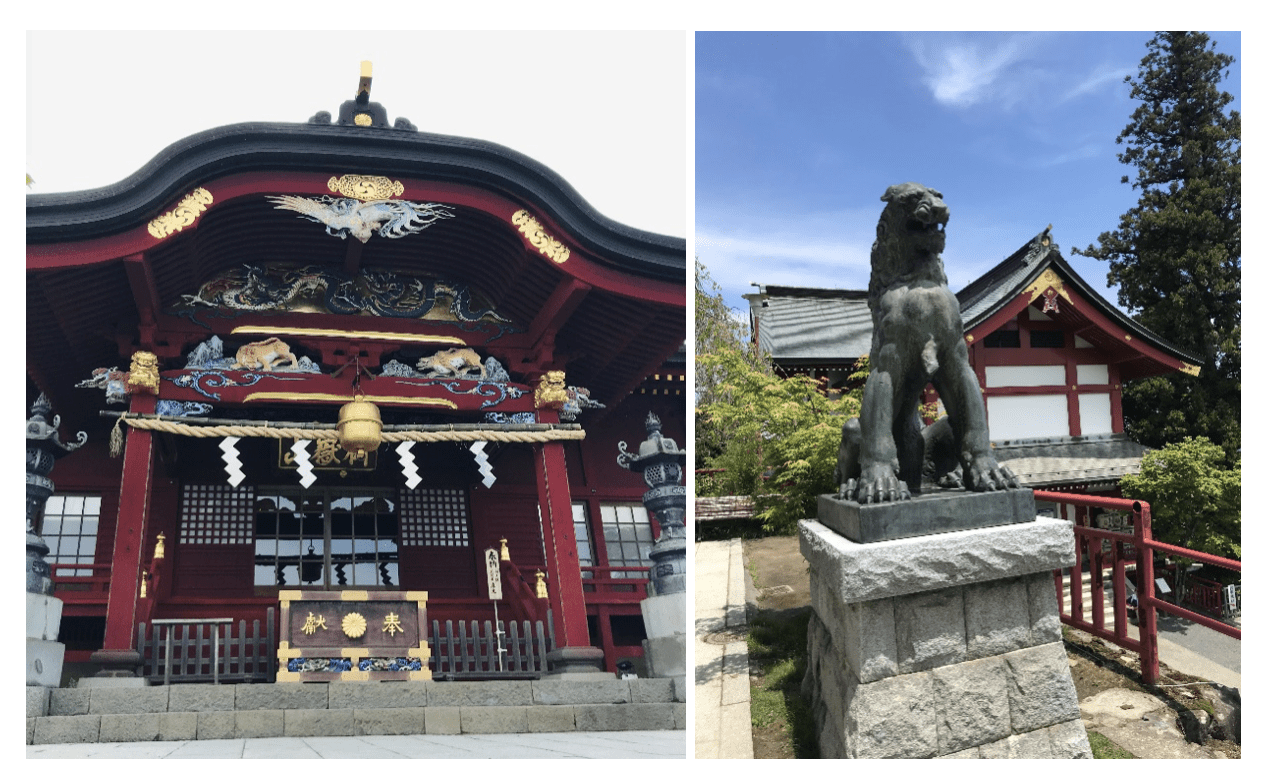
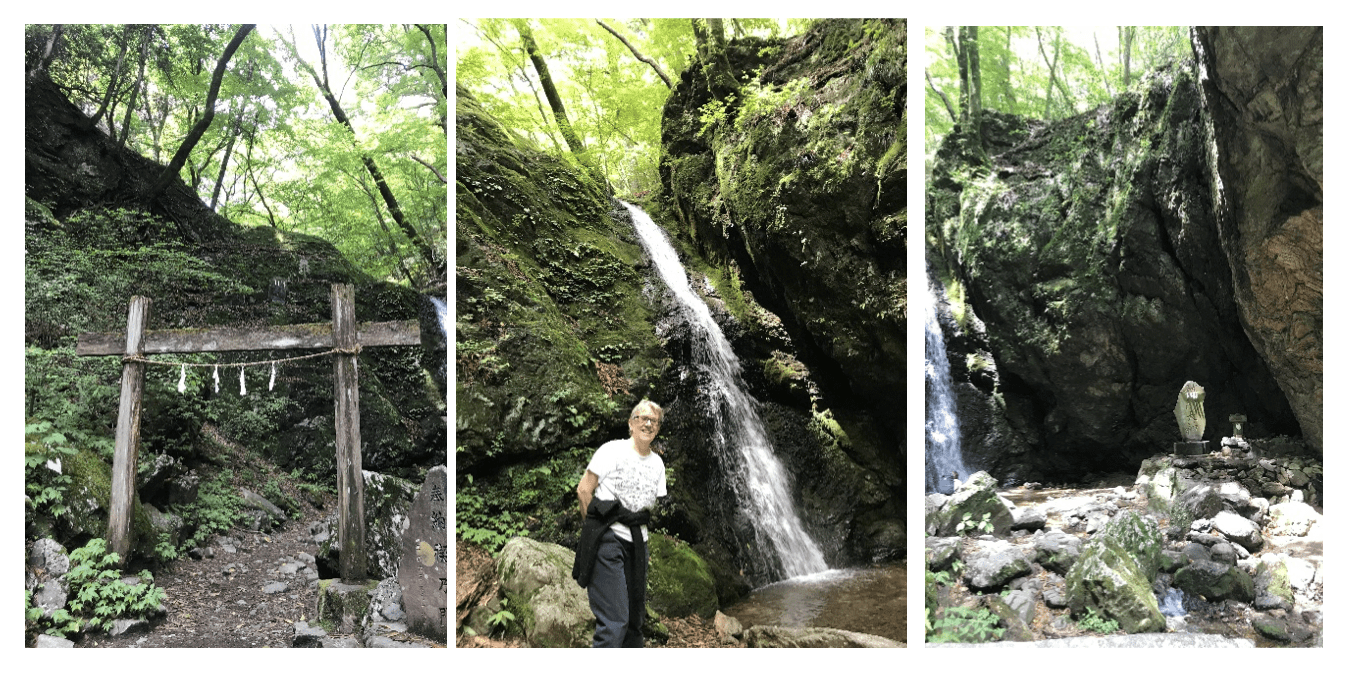
The chief shrine is fronted by two great wolf statues and is surrounded by a complex of smaller shrines to wolves and dogs. There are also trails from the shrine for hiking up and around the mountain, including one that leads to a waterfall shrine.
**************************
TRADITIONAL JAPANESE THEATRE
KABUKI
With only a vague idea of this theatrical art form, I booked a 4-hour production at the Kabukiza Theatre, Ginza, Tokyo. Kiwametsuki Banzui Chobe, kinpira homon arasoi. “The Renowned Banzui Chobe, with a play-within-a-play” (audio guide in English).
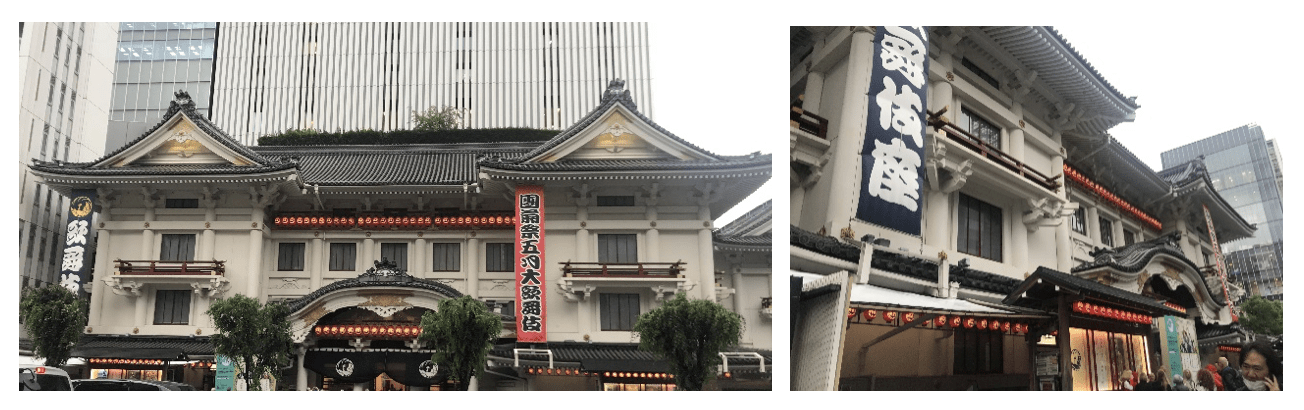
Set in the early Edo period, townsman hero Banzui Chobe stands up against the tyrannical samurai Mizuno and is ultimately murdered. Kabuki is a glorious spectacle involving epic operatic stories, fabulous costumes, classical instruments and black-clothed “assistants” subtly moving around the stage. The latter, at pivotal moments, expand the voluminous robes of the main actors to emphasise a sudden dramatic pose – Mie – accompanied by the sound of wooden clappers. Stunning.
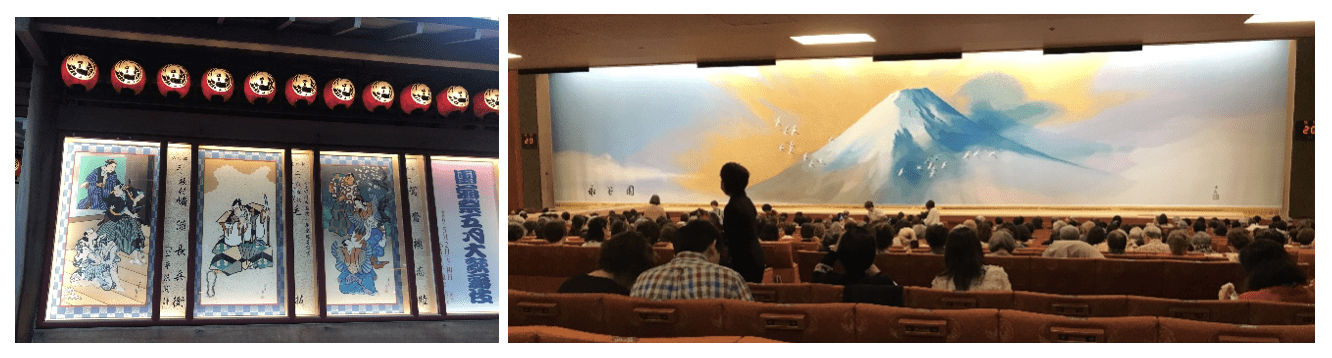
I thought Kabuki would be too alien to affect me emotionally but I was captivated from the start and wept more than once. There was a 25-minute intermission, with Bento box lunches sold on the premises, and we were allowed to eat in our seats. I could have stayed there all day!
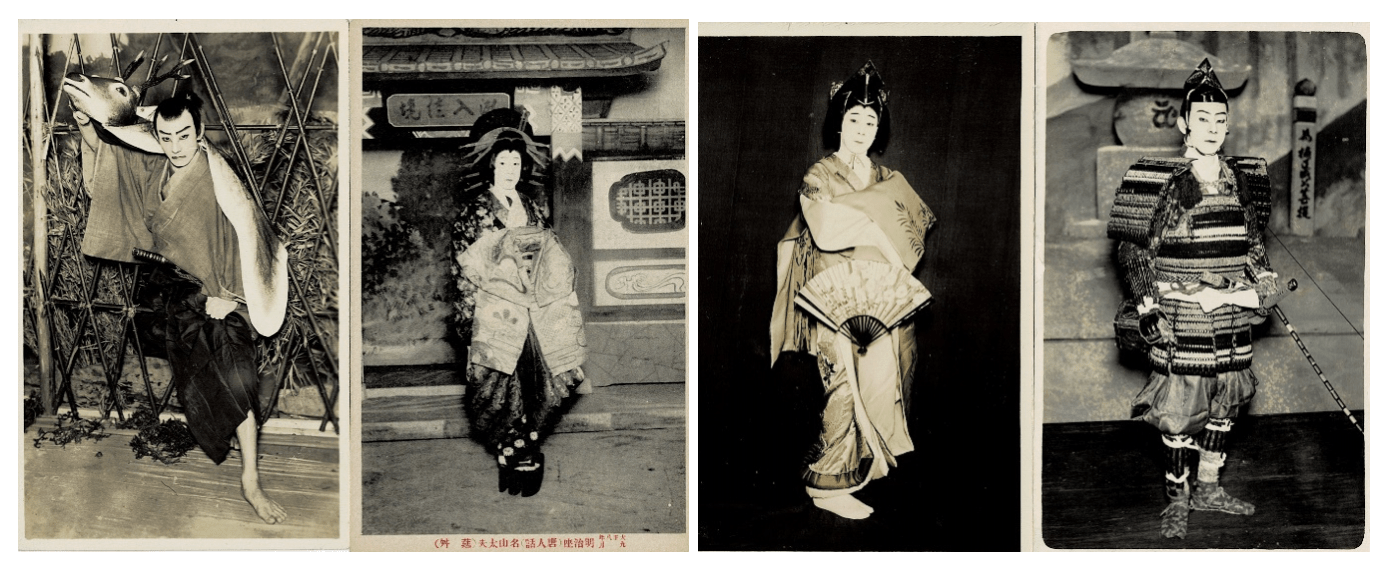
A magical epilogue to that experience: after posting on social media how I much I loved Kabuki, the father of one of my readers sent me photographs of a family member who was a Kabuki actor.
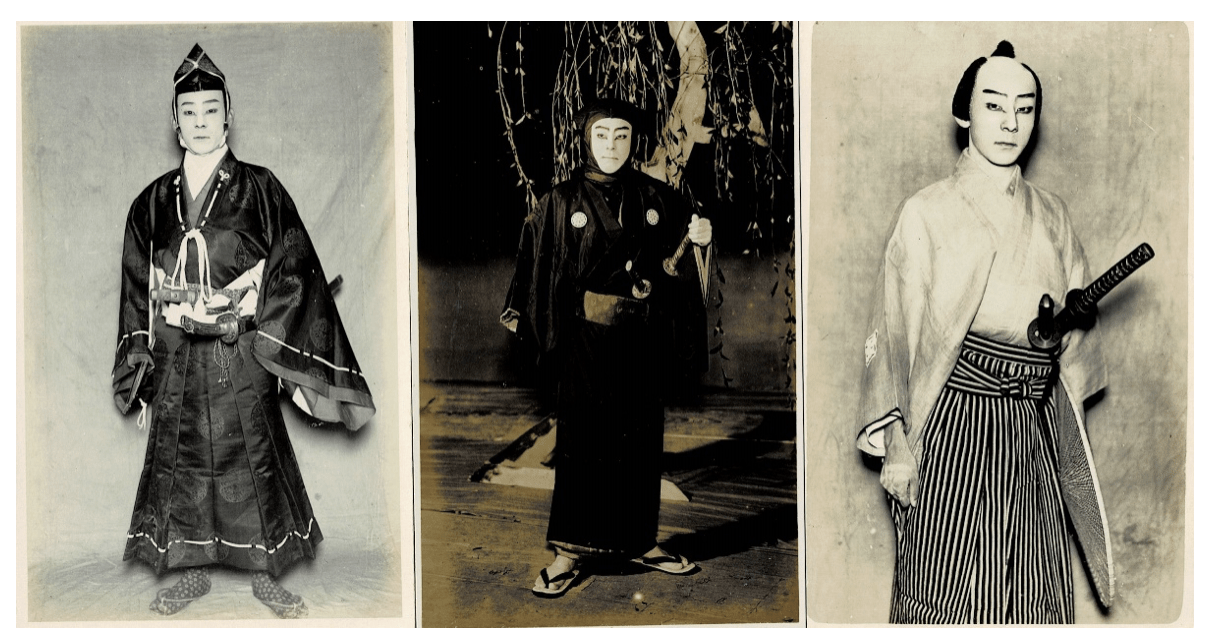
My reader’s great-grandfather was Ichikawa Ensho, 3rd heir and younger brother of the famous Ichikawa Sadanji. (Kabuki actors are often born into Kabuki families. The show I saw had an amazing child actor.) These photos are 100-yrs-old. I was honoured that the family chose to share their legacy with me.
NOH
Despite my intense emotional response to Kabuki, I was convinced that Noh couldn’t have a similar effect. For I knew it was a highly-stylised art form from my study of its influence on Ireland’s national poet, W.B. Yeats. But once again, the cultural divide collapsed when I attended Hashitomi at the National Noh Theatre, Shibuya, Tokyo.
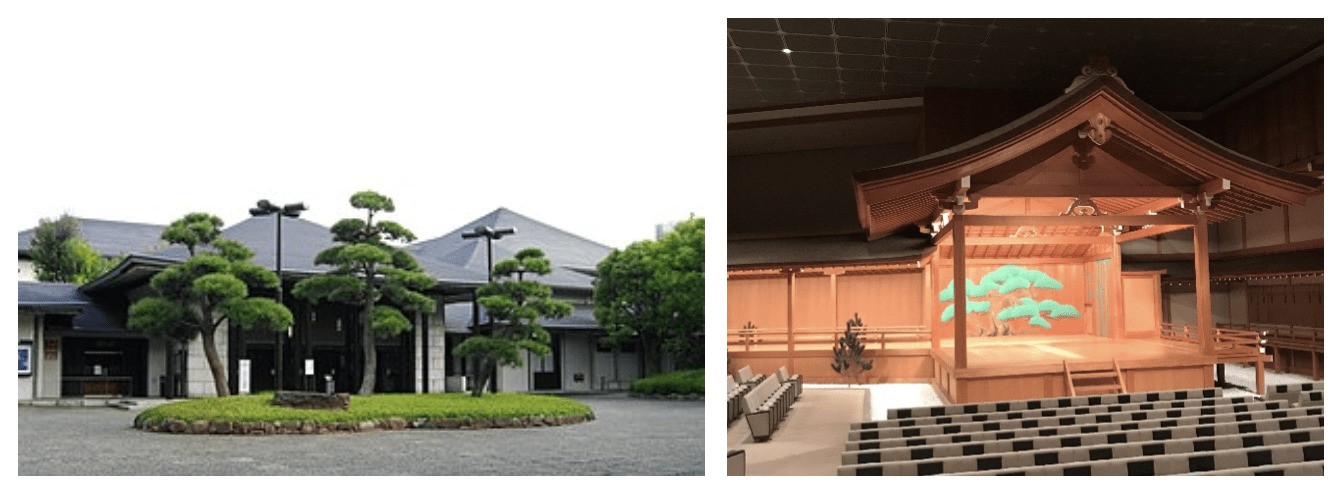
Only when I read the programme did I realise I knew the story, as it came from Genji Monogatari (The Tale of Genji). The sweeping 11th century masterpiece by Lady Murasaki Shikibu is a favourite book. (English translation, E. Seidensticker, over 1000 pages).
And while the play was indeed exquisitely stylised with sparse set design (the signature sole backdrop of oi-matsu pine), few props, precisely-controlled movements, male actor playing the female lead with masked face, high-pitched vocalisation and staccato instrumentation … there I was again, weeping my heart out.
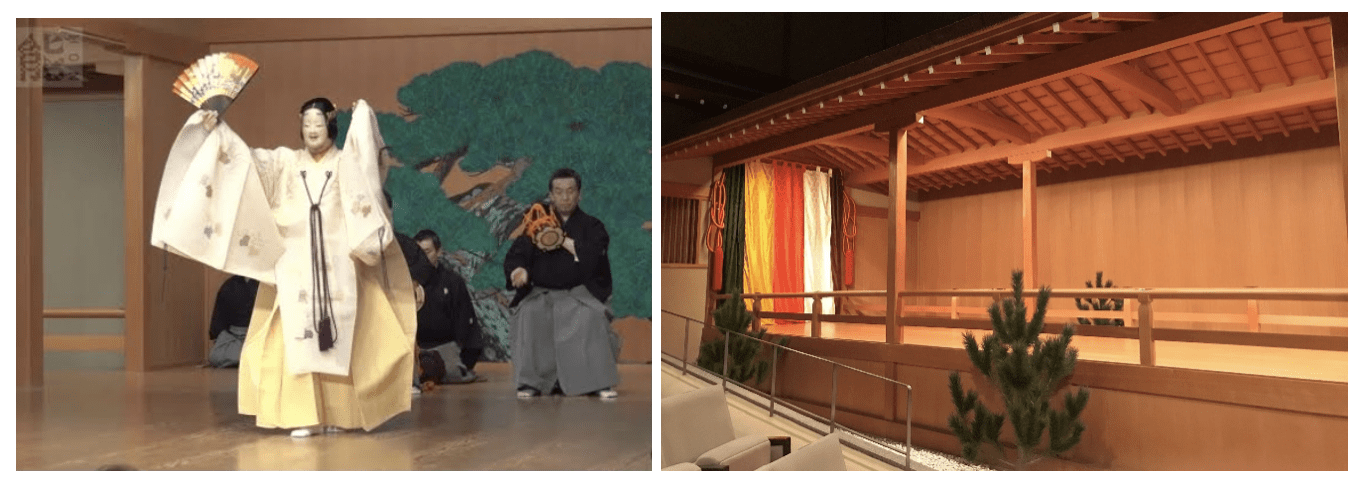
The finale would move a heart of stone as Lady Yugao’s spirit is freed at last by the prayers of Buddhist monks. She stood singing, hand raised in farewell to us, before disappearing behind the multicoloured curtain of the runway.
**************************